

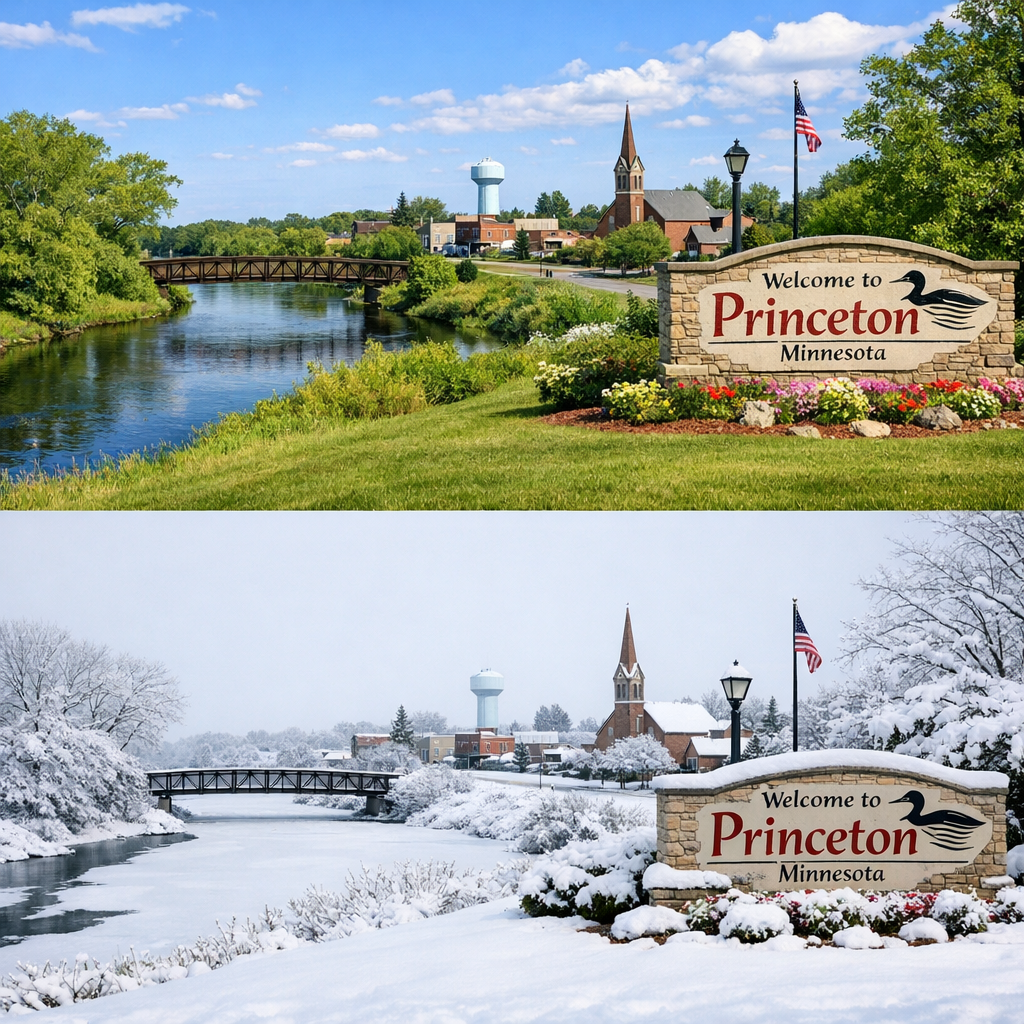
Princeton, Minnesota, experiences a diverse climate characterized by distinct seasonal changes. Understanding these patterns is essential for residents and visitors alike.
Seasonal Temperature Variations
Princeton’s climate features warm, wet summers and freezing, snowy winters. The warm season spans approximately 3.9 months, from May 19 to September 17, with average daily high temperatures exceeding 70°F. July stands out as the hottest month, boasting an average high of 82°F and a low of 60°F. Conversely, the cold season lasts about 3.3 months, from November 26 to March 3, with average daily highs below 34°F. January is the coldest month, with an average low of 5°F and a high of 22°F.
Precipitation and Snowfall
Precipitation in Princeton is fairly evenly distributed throughout the year, with an annual average of approximately 30.83 inches. June typically receives the most rainfall, averaging 4.29 inches. Snowfall is a significant aspect of Princeton’s winter, with an average annual accumulation of 19.8 inches over approximately 67.7 snowfall days.
Plant Hardiness and Frost Dates
For gardening enthusiasts, it’s important to note that Princeton falls within Plant Hardiness Zone 4b, indicating average annual minimum temperatures between -25°F and -20°F. The average last frost date occurs between May 1 and May 10, while the first frost date typically falls between September 21 and September 30, resulting in an average of 125 to 150 frost days annually.
Environmental Considerations
Princeton’s climate classification is Dfb, denoting a humid continental climate with mild summers and wet conditions year-round. This classification underscores the importance of being prepared for a range of weather conditions, from hot, humid summers to cold, snowy winters.
Understanding Princeton’s climate patterns is crucial for planning activities, agriculture, and daily life. Staying informed about seasonal changes and weather forecasts can help residents and visitors make the most of what each season has to offer.