

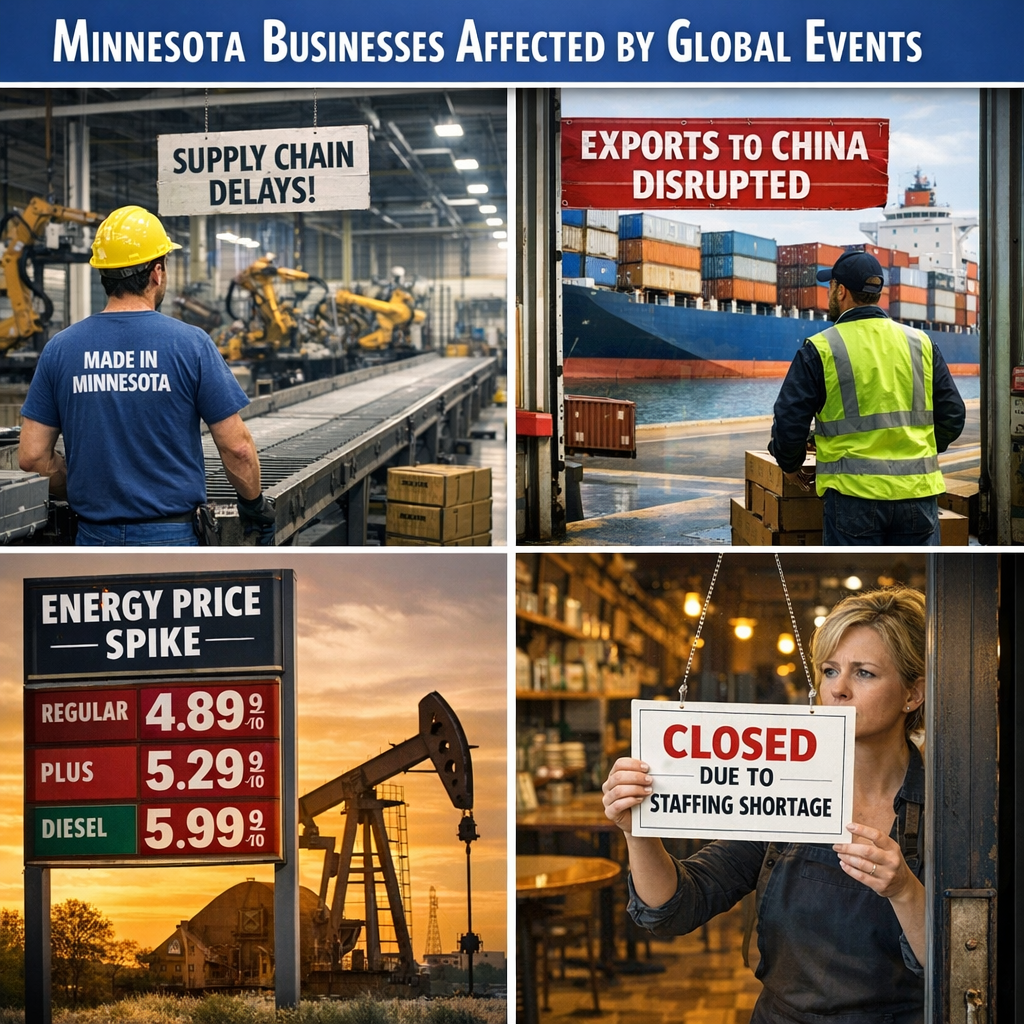
Minnesota’s economy is deeply intertwined with global events, with international developments significantly influencing local industries and businesses. Understanding these connections is crucial for residents and policymakers alike.
Trade and Export Dynamics
International trade plays a pivotal role in Minnesota’s economic health. In recent times, the state experienced a notable decline in exports. For instance, in the second quarter of 2025, Minnesota’s exports dropped by $1.3 billion, a 19% decrease compared to the same period in 2024. This decline was largely attributed to a significant reduction in mineral fuel and oil exports to Canada, which fell by 96%, amounting to a $703 million decrease. Such fluctuations underscore the state’s vulnerability to global market shifts and the importance of diversifying export portfolios.
Immigration Policies and Local Businesses
Federal immigration enforcement actions have also had profound effects on Minnesota’s local businesses. The deployment of thousands of federal agents in the state led to widespread fear and uncertainty, particularly among immigrant communities. This environment resulted in reduced foot traffic, staffing challenges, and lost revenue for many businesses. Governor Tim Walz highlighted the situation, stating that the fear and uncertainty were undermining the hard work of business owners and affecting the broader economy. The presence of federal agents disrupted daily life, with many individuals afraid to leave their homes, leading to missed work and decreased consumer activity.
Cultural Events and Community Impact
Global events and policies have also influenced Minnesota’s cultural landscape. The International Festival of Minnesota, formerly known as the Festival of Nations, is a testament to the state’s rich cultural diversity. Scheduled for April 10–11, 2026, at the Saint Paul RiverCentre, the festival featured participation from 67 nations and ethnic communities, offering global cuisine, artisan goods, and music and dance performances. Such events not only celebrate cultural heritage but also contribute to the local economy by attracting visitors and promoting local businesses.
However, the climate of fear resulting from federal immigration operations led to the cancellation of several cultural events. For example, the Lunar New Year celebration at Minneapolis’ Midtown Global Market was canceled amid the unrest in the city. These cancellations highlight the broader societal impacts of global policies on local communities.
Conclusion
The interplay between global events and Minnesota’s local economy is multifaceted. Trade dynamics, federal policies, and cultural events are all influenced by international developments, affecting businesses and communities across the state. Staying informed about these global-local connections is essential for fostering a resilient and inclusive economic environment in Minnesota.